
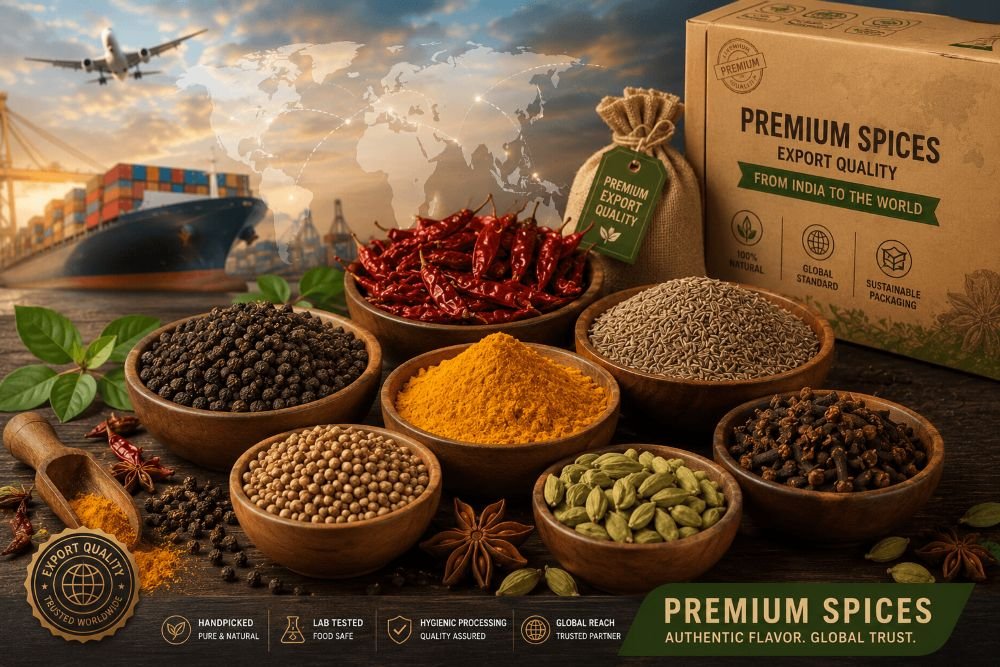
The global demand for premium spices continues to grow as consumers, food manufacturers, restaurants, and retailers seek authentic flavors, natural ingredients, and high-quality agricultural products. India remains one of the world’s leading exporters of spices due to its rich agricultural heritage, favorable climate, and wide variety of spice cultivation. However, for international buyers and importers, choosing high-quality spices is essential to ensure product safety, customer satisfaction, market competitiveness, and long-term business success.
Importing spices is not only about finding the lowest price supplier. Quality, consistency, packaging, certifications, purity, aroma, and compliance with international standards all play a major role in successful spice trading. Selecting the right supplier and understanding the characteristics of premium spices can help importers avoid losses, rejected shipments, poor customer reviews, and legal complications.
Understand the Origin of the Spices
The origin of spices significantly affects their flavor, aroma, oil content, color, and market value. Different regions produce spices with unique characteristics because of soil quality, climate, cultivation methods, and harvesting techniques. For example, Indian black pepper, turmeric, cumin, cardamom, and red chili are globally recognized for their superior quality and rich flavor profiles.
Importers should always ask suppliers about the source region, farming methods, harvesting season, and processing techniques. Reliable exporters maintain transparency regarding product origin and can provide documentation or certifications if required.
Check Aroma and Flavor Strength
One of the easiest ways to identify premium spices is by evaluating their natural aroma and flavor intensity. High-quality spices contain rich essential oils that produce strong fragrance and authentic taste. Weak aroma or dull flavor may indicate poor storage, low-grade material, old stock, or excessive processing.
Fresh spices should have:
- Strong natural aroma
- Rich flavor profile
- Uniform texture
- Natural appearance
- Proper moisture balance
For example, premium cumin should have a warm earthy smell, while high-grade cardamom should offer a sweet and refreshing aroma. Buyers often request small samples before placing bulk import orders to evaluate product quality personally.
Examine Color and Appearance
Color plays a major role in determining spice quality, especially for products such as turmeric, paprika, chili powder, and coriander. Bright and natural color usually indicates freshness and proper processing. Extremely artificial or uneven color may suggest contamination, poor handling, or use of synthetic additives.
Importers should inspect:
- Uniform size and shape
- Natural color consistency
- Clean appearance
- Absence of foreign particles
- Proper drying quality
Premium export-grade spices are usually cleaned and sorted carefully to maintain international quality standards.
Verify Purity and Cleanliness
Purity is one of the most important factors in international spice trade. Low-quality products may contain dust, stones, stems, artificial colors, or other impurities. Contaminated spices can damage business reputation and may fail import inspections in destination countries.
Professional spice exporters conduct cleaning, grading, sorting, and quality testing before shipment. Buyers should request:
- Product specifications
- Laboratory test reports
- Moisture level details
- Purity percentage
- Microbial testing reports if necessary
Pure spices not only improve food quality but also increase customer trust and market value.
Check Moisture Content
Moisture content directly affects shelf life, freshness, and product safety. Excess moisture can lead to fungal growth, spoilage, bacterial contamination, and reduced product quality during transportation or storage.
High-quality export spices usually maintain controlled moisture levels to ensure:
- Longer shelf life
- Better aroma retention
- Reduced spoilage risk
- Improved storage stability
Proper drying and moisture control are especially important for products such as turmeric, coriander seeds, black pepper, and red chili.
Review Certifications and Compliance Standards
International buyers should always verify whether the supplier complies with food safety and export regulations. Certified suppliers demonstrate professionalism, quality control, and commitment to international standards.
Common certifications in spice export include:
- FSSAI
- ISO Certification
- HACCP
- APEDA Registration
- Organic Certification
- GMP Standards
Depending on the destination country, importers may also require pesticide residue testing, microbial analysis, heavy metal testing, or phytosanitary certificates.
Working with certified exporters reduces the risk of customs rejection and improves buyer confidence.
Evaluate Packaging Quality
Packaging is a critical factor in international spice transportation. Poor packaging may expose products to moisture, contamination, sunlight, or physical damage during shipping.
Good export packaging should:
- Preserve freshness
- Protect aroma and color
- Prevent contamination
- Support long-distance transportation
- Meet international labeling standards
Professional exporters offer different packaging options including:
- PP bags
- Vacuum packaging
- Kraft paper bags
- Food-grade pouches
- Bulk export containers
Importers should discuss packaging requirements clearly before shipment confirmation.
Choose a Reliable Spice Exporter
Selecting the right supplier is one of the most important decisions for any importer. A professional exporter ensures consistent quality, proper documentation, transparent communication, and timely delivery.
Reliable spice exporters generally provide:
- Product samples
- Quality reports
- Competitive pricing
- Export documentation
- Timely communication
- Custom packaging support
- Long-term business cooperation
Importers should also verify supplier experience, export history, customer reviews, and business certifications before finalizing agreements.
Understand International Market Requirements
Different countries have different food safety standards and import regulations. A spice product accepted in one market may not meet the standards of another country.
Before importing spices, buyers should understand:
- Import regulations
- Labeling requirements
- Packaging standards
- Maximum residue limits
- Customs documentation
- Food safety compliance
Experienced exporters can help buyers understand country-specific requirements and avoid shipment delays or legal complications.
Importance of Product Sampling
Before placing large bulk orders, importers should request product samples for inspection and testing. Sampling allows buyers to evaluate:
- Aroma
- Color
- Purity
- Texture
- Moisture level
- Packaging quality
Laboratory testing of samples may also help identify contaminants, additives, or quality inconsistencies before finalizing large transactions.
Build Long-Term Supplier Relationships
Long-term relationships with trusted spice exporters provide multiple business advantages including better pricing, consistent quality, priority production, smoother communication, and reliable supply chain management.
Instead of frequently changing suppliers for small price differences, importers should focus on quality consistency, trust, and professional cooperation. Strong supplier relationships contribute significantly to successful international spice trading.
Conclusion
Choosing high-quality spices for international import requires careful evaluation of product purity, aroma, color, moisture content, packaging, certifications, and supplier reliability. Premium spices not only improve customer satisfaction but also strengthen brand reputation and business growth in competitive global markets.
India continues to be one of the most trusted sources for export-quality spices due to its agricultural diversity and centuries-old spice cultivation tradition. By partnering with experienced and professional exporters, international buyers can access authentic spices that meet global quality standards and market expectations.
Businesses that prioritize quality, compliance, and reliable sourcing are more likely to succeed in the growing international spice trade industry.